
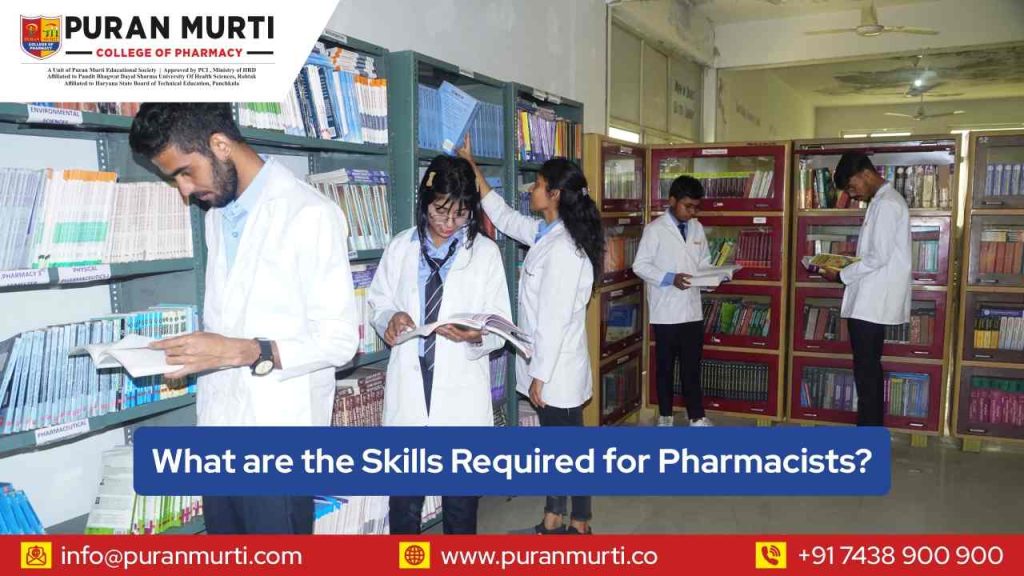
What are the skills required for pharmacists?
Posted on : 23 September, 2026 12:19 pm
Pharmacists play an important role in healthcare. They help patients use medicines safely and correctly.
The skills required for pharmacists include medicine knowledge, prescription checking, communication, patient counselling and attention to detail. Pharmacists also need computer skills, inventory knowledge and professional ethics.
The role of a pharmacist is not limited to selling medicines. Pharmacists may work in hospitals, retail pharmacies, laboratories, pharmaceutical companies and research organisations.
This guide explains the most important skills required for pharmacists. It also shows how students can develop these skills during their pharmacy course.
Why Pharmacist Skills Matter
A pharmacist handles medicines that directly affect patient health. A small mistake can cause serious problems.
Pharmacists must check:
- The correct medicine.
- The correct strength.
- The correct quantity.
- The correct dosage.
- The correct instructions.
- Possible drug interactions.
- Patient allergies.
- Expiry dates.
- Storage conditions.
Good skills help pharmacists prevent errors. They also help patients understand their treatment.
1. Knowledge of Medicines
Medicine knowledge is one of the most important skills required for pharmacists. Pharmacists must understand how medicines work and how patients should use them.
Important areas include:
- Drug names.
- Uses of medicines.
- Dosage forms.
- Side effects.
- Contraindications.
- Drug interactions.
- Storage requirements.
- Warnings and precautions.
- Brand and generic names.
A pharmacist should know the difference between tablets, capsules, syrups, creams, injections and inhalers.
For example, some medicines must be taken with food. Others work better on an empty stomach. A pharmacist should explain these instructions clearly.
2. Prescription Review
Pharmacists must read and review prescriptions carefully. They should check whether the prescription is complete and understandable.
A prescription review may include:
- Patient name.
- Medicine name.
- Strength.
- Dosage.
- Frequency.
- Duration.
- Doctor’s details.
- Date of prescription.
- Special instructions.
If the prescription looks unclear, the pharmacist should contact the doctor or healthcare team. The pharmacist should not guess the meaning of an unclear instruction.
Prescription review helps prevent incorrect medicine use. It is especially important for children, older adults and patients taking several medicines.
3. Accurate Dispensing
Dispensing means preparing and supplying medicine to a patient. It is a key responsibility of a pharmacist.
A pharmacist must:
- Select the correct product.
- Check the medicine strength.
- Count or measure the quantity.
- Prepare the label.
- Check the expiry date.
- Pack the medicine safely.
- Explain how to use it.
The pharmacist should complete a final check before handing over the medicine.
Accuracy is essential in every pharmacy setting. A busy workplace is not an excuse for skipping safety checks.
4. Patient Counselling
Patient counselling is one of the most valuable pharmacist skills. It helps patients use medicines correctly.
A pharmacist may explain:
- When to take the medicine.
- How much to take.
- How long to take it.
- Whether to take it with food.
- What side effects to watch for.
- How to store it.
- What to do if a dose is missed.
- When to contact a doctor.
Good counselling uses simple language. Avoid difficult medical terms when speaking with patients.
The pharmacist should also ask the patient to repeat key instructions. This helps confirm that the patient has understood the advice.
5. Communication Skills
Communication is among the most important skills required for pharmacists. Pharmacists interact with patients, doctors, nurses, suppliers and colleagues.
Good communication includes:
- Listening carefully.
- Speaking clearly.
- Asking useful questions.
- Showing patience.
- Explaining medicines simply.
- Respecting privacy.
- Avoiding judgement.
- Giving accurate instructions.
A pharmacist may meet patients who are worried, confused or in pain. Calm communication can make the interaction easier.
6. Attention to Detail
Pharmacy work requires careful attention. Many medicine names look or sound similar.
A pharmacist should check:
- Medicine name.
- Strength.
- Form.
- Quantity.
- Patient details.
- Prescription instructions.
- Batch number.
- Expiry date.
- Storage conditions.
Attention to detail helps prevent dispensing errors.
Develop this skill by using checklists and following a standard process. Do not rely only on memory.
7. Calculation Skills
Pharmacists use calculations while preparing and dispensing medicines. They may calculate doses, quantities, concentrations and infusion rates.
Important areas include:
- Unit conversion.
- Weight-based dosage.
- Concentration.
- Dilution.
- Percentage solutions.
- Quantity calculations.
- Liquid dosage.
- Pediatric dosage.
A calculation error can affect patient safety. Practise regularly during your course.
Always check important calculations twice. Ask a senior professional for help when necessary.
8. Knowledge of Drug Interactions
Some medicines can interact with other medicines, food or supplements. These interactions may reduce effectiveness or increase side effects.
Pharmacists should ask patients about:
- Current medicines.
- Over-the-counter products.
- Vitamins.
- Herbal supplements.
- Allergies.
- Existing health conditions.
A pharmacist may identify a possible interaction and contact the doctor for clarification.
This skill is especially important for patients who take medicines for diabetes, blood pressure, heart disease or epilepsy.
9. Patient Safety
Patient safety should guide every pharmacy decision. Pharmacists must follow safe procedures at all times.
Safety practices include:
- Checking prescriptions.
- Confirming patient identity.
- Checking allergies.
- Preventing duplicate therapy.
- Explaining instructions.
- Reporting medication errors.
- Maintaining clean work areas.
- Storing medicines correctly.
Pharmacists should also protect patient information. Private medical details must not be shared without a valid reason.
10. Professional Ethics
Ethical practice is an essential skill for pharmacists. Pharmacists must act honestly and protect patient welfare.
Professional ethics includes:
- Respecting patient privacy.
- Giving accurate information.
- Avoiding false claims.
- Following legal requirements.
- Refusing unsafe requests.
- Maintaining professional boundaries.
- Treating patients fairly.
A pharmacist should never recommend a medicine only to increase sales. Patient safety must come first.
11. Knowledge of Pharmacy Law
Pharmacists must understand the laws and rules that control medicine supply and professional practice.
Important areas may include:
- Prescription medicines.
- Controlled medicines.
- Labelling rules.
- Storage requirements.
- Record keeping.
- Sale of medicines.
- Pharmacy registration.
- Professional conduct.
The exact legal requirements depend on the country and state. Pharmacists in India should follow the applicable Pharmacy Council rules and medicine regulations.
Laws can change. Keep learning through official updates and professional training.
12. Inventory Management
Pharmacists often manage medicine stock. Good inventory skills help prevent shortages and wastage.
Inventory duties include:
- Ordering medicines.
- Checking deliveries.
- Recording stock.
- Monitoring expiry dates.
- Using the first-expiry-first-out method.
- Maintaining storage conditions.
- Returning damaged products.
- Tracking fast-moving medicines.
A pharmacist should know which medicines need refrigeration. Temperature-sensitive products require special care.
Inventory management is important in hospitals, retail pharmacies and pharmaceutical warehouses.
13. Computer and Digital Skills
Modern pharmacies use computer systems. Pharmacists should feel comfortable with digital tools.
Useful skills include:
- Pharmacy billing software.
- Electronic health records.
- Inventory systems.
- Prescription processing.
- Spreadsheet use.
- Online medicine databases.
- Digital reporting.
- Email communication.
- Electronic documentation.
The Pharmacy Council of India has included digital and technological awareness among the competencies expected in modern pharmacy education.
Technology can improve accuracy. However, pharmacists must still review information carefully.
14. Clinical Knowledge
Clinical knowledge helps pharmacists understand patient needs. It also supports better communication with doctors and nurses.
Pharmacists should understand common conditions such as:
- Diabetes.
- High blood pressure.
- Asthma.
- Infections.
- Pain.
- Allergies.
- Stomach disorders.
- Skin conditions.
They should know the purpose of common medicine groups. They should also understand when a patient needs medical attention.
Pharmacists do not replace doctors. They support safe medicine use and refer patients when necessary.
15. Teamwork
Pharmacists work as part of a healthcare team. They may coordinate with doctors, nurses, laboratory staff and hospital administrators.
Teamwork includes:
- Sharing accurate information.
- Respecting other professionals.
- Reporting medicine concerns.
- Participating in patient-care discussions.
- Supporting colleagues.
- Following workplace procedures.
A good team member communicates problems early. This helps prevent errors and delays.
16. Problem-Solving
Pharmacists face different problems each day. They need to find safe and practical solutions.
Examples include:
- An unclear prescription.
- A medicine shortage.
- A possible drug interaction.
- A patient allergy.
- An unavailable dosage form.
- A storage problem.
- A billing error.
The pharmacist should collect the facts first. Then, they should consider the safest solution.
17. Time Management
A pharmacy can become busy quickly. Pharmacists may handle prescriptions, patients, stock and phone calls at the same time.
Time management helps pharmacists remain accurate during busy periods.
Useful habits include:
- Prioritising urgent tasks.
- Using checklists.
- Organising the work area.
- Completing records on time.
- Avoiding unnecessary interruptions.
- Reviewing work before finishing.
Speed is useful, but accuracy is more important.
18. Leadership Skills
Experienced pharmacists may manage teams and pharmacy operations. Leadership skills help them guide staff and improve service quality.
Leadership includes:
- Delegating tasks.
- Training new staff.
- Making safe decisions.
- Solving workplace problems.
- Monitoring performance.
- Supporting team members.
- Following standard procedures.
Pharmacists who own a pharmacy also need business and financial skills.
19. Research and Analytical Skills
Research skills help pharmacists evaluate medicine information. They may read clinical studies, safety alerts and treatment guidelines.
Analytical skills help them:
- Compare medicines.
- Review evidence.
- Identify risks.
- Understand research data.
- Prepare reports.
- Support treatment decisions.
Students can develop these skills through projects, seminars and journal reading.
Use reliable sources. Do not depend on unverified social media claims for medical information.
20. Continuous Learning
Medicines, technology and treatment guidelines change over time. Pharmacists must continue learning after graduation.
Ways to improve include:
- Attending workshops.
- Reading professional journals.
- Joining training programmes.
- Reviewing safety alerts.
- Learning new software.
- Completing certifications.
- Following official updates.
- Discussing cases with senior professionals.
Continuous learning supports safe and modern pharmacy practice. It also improves career growth.
Skills for Different Pharmacy Careers
Community Pharmacist
A community pharmacist needs strong communication and counselling skills. They should also understand inventory, billing and customer service.
Hospital Pharmacist
A hospital pharmacist needs clinical knowledge, teamwork and medicine-safety skills. They may work with doctors and nurses.
Industrial Pharmacist
An industrial pharmacist may need skills in quality control, manufacturing, documentation and regulatory compliance.
Research Pharmacist
A research pharmacist needs scientific thinking, laboratory skills, data analysis and report writing.
Medical Representative
A medical representative needs communication, product knowledge, presentation and relationship-building skills.
How Students Can Build These Skills
Pharmacy students can develop professional skills during their studies.
Try these steps:
- Practise prescription reading.
- Learn common medicines and uses.
- Improve medical vocabulary.
- Join practical laboratory sessions.
- Complete hospital or community internships.
- Learn pharmacy software.
- Practise patient counselling.
- Read medicine safety updates.
- Work on research projects.
- Improve communication through presentations.
Practical training helps students connect classroom knowledge with real pharmacy work.
Is Pharmacy a Good Career?
Pharmacy can be a rewarding career for students interested in medicines and healthcare. It offers opportunities in community pharmacies, hospitals, pharmaceutical companies, research and public health.
Success depends on knowledge, ethics, communication and practical skills. A pharmacy degree alone is not enough. Students should continue improving after graduation.
Choose the course and career path that matches your interests. You may prefer patient care, research, manufacturing or business.
Final Thoughts
The skills required for pharmacists include medicine knowledge, prescription review, accurate dispensing, patient counselling and communication.
Pharmacists also need attention to detail, calculation ability, ethics, inventory management and digital skills. Clinical knowledge and teamwork are equally important.
The profession is changing with new medicines, technology and patient-care models. Pharmacists who keep learning can build strong and meaningful careers.
FAQs
What are the most important skills required for pharmacists?
The most important skills include medicine knowledge, prescription review, dispensing, patient counselling, communication, attention to detail and professional ethics.
Why is communication important for pharmacists?
Communication helps pharmacists explain medicines, answer patient questions and prevent incorrect medicine use.
Do pharmacists need computer skills?
Yes. Pharmacies use billing software, inventory systems, electronic records and digital medicine databases.
What is the role of a pharmacist in patient safety?
A pharmacist checks prescriptions, identifies medicine risks, explains correct use and helps prevent dispensing errors.
Do pharmacists need calculation skills?
Yes. Pharmacists may calculate doses, concentrations, quantities and liquid medicine measurements.
Which skills help pharmacists manage a pharmacy?
Inventory management, customer service, billing, leadership, teamwork and financial awareness are useful for pharmacy management.
How can pharmacy students improve their skills?
Students can complete internships, practise counselling, study medicines, join workshops and learn pharmacy software.
Is patient counselling part of pharmacy work?
Yes. Pharmacists often explain dosage, timing, side effects, storage and missed-dose instructions.
Do pharmacists need continuing education?
Yes. Continuing education helps pharmacists stay updated about medicines, technology, safety alerts and changing regulations.